The hospital stay felt like the hard part. The discharge felt like relief. Then everyone went home, and the real work began.
Stroke recovery at home is where most of the progress happens — and where most families feel least prepared. The clinical team has done their job. The patient is medically stable. But stable and ready are not the same thing, and the gap between them lands entirely on the people who love them.
The first 90 days after a stroke are among the most critical in a person’s long-term recovery. They’re also, for most families, among the most disorienting. What follows is a grounded look at what to expect — and how to navigate it without losing yourself in the process.
Quick Answer: Stroke Recovery at Home
Stroke recovery at home involves managing physical rehabilitation, medication schedules, cognitive and emotional changes, and safety risks — all while supporting someone whose abilities may fluctuate day to day. Most families need more help than they anticipate. Professional home care, therapy follow-through, and a structured daily routine are the three factors that most consistently predict better outcomes in the first 90 days.
What Actually Happens to the Brain After a Stroke
A stroke occurs when blood flow to part of the brain is interrupted. Brain cells begin to die within minutes. What survives depends on how quickly treatment begins — but even a fast response leaves damage that the brain then spends months, and sometimes years, working around.
The brain’s capacity to reorganize after injury is real. Neuroplasticity — the ability to form new neural pathways that compensate for damaged ones — is the biological foundation of stroke recovery. But it requires consistent, repetitive stimulation. Exercises repeated daily. Skills practiced even when they’re frustrating. Routines maintained even when they feel unnecessary.
What this means practically is that recovery isn’t passive. It doesn’t happen through rest alone. The families and caregivers who understand this — who recognize that every assisted transfer, every meal, every short walk down the hallway is part of the rehabilitation process — tend to see better outcomes than those who are simply trying to keep the person comfortable.
The Symptoms Families Are Least Prepared For
Physical impairments after a stroke are visible and expected. Weakness on one side of the body, difficulty walking, problems with coordination — families anticipate these. What they’re less prepared for are the cognitive and emotional changes that accompany them.
Post-stroke fatigue is profound and poorly understood by people who haven’t experienced it. It’s not tiredness in the ordinary sense. A person can sleep eight hours and be exhausted by a ten-minute conversation. Pushing through it doesn’t build endurance the way it might with typical fatigue — it depletes. Learning to read the signs and adjust accordingly is one of the most important skills a family caregiver can develop.
Emotional lability — sudden, uncontrollable crying or laughing that doesn’t match the situation — affects roughly half of stroke survivors and is caused by neurological damage, not psychological distress. Families who don’t know to expect it often misinterpret it as depression or regression. It typically improves over time but can be deeply unsettling in the meantime.
Cognitive changes vary widely depending on where the stroke occurred. Memory problems, difficulty concentrating, slowed processing, and challenges with planning and sequencing are all common. A person who seems “fine” in a brief interaction may struggle significantly with the demands of daily life.
The First Two Weeks: Setting Up for Success
Discharge from a hospital or inpatient rehabilitation facility is a transition point, not a finish line. The decisions made in the first two weeks at home shape the entire trajectory of recovery.
The physical environment matters immediately. A bedroom on the main floor, a hospital bed if needed, grab bars in the bathroom, a shower chair, removal of fall hazards — these aren’t optional accommodations. They’re safety infrastructure. A fall in the first weeks after a stroke can set recovery back significantly and, in some cases, cause a second brain injury.
Therapy continuity matters just as much. Outpatient physical, occupational, and speech therapy should be scheduled before discharge, not after. The window of greatest neuroplasticity is the first three to six months post-stroke. Allowing gaps in therapy during that window is one of the most common and most costly mistakes families make — not because they don’t care, but because the logistics are overwhelming and other things feel more urgent.
A family caregiver who had managed her mother’s meals, medications, and mobility for three weeks after discharge described the experience this way: she knew her mother needed therapy but couldn’t figure out how to get her there, coordinate the appointments, and still manage everything else. By the time the referral was processed, six weeks had passed. The therapists who eventually saw her mother were clear that earlier intervention would have made a meaningful difference.
Medication Management After a Stroke
Most stroke survivors are discharged with multiple new medications — blood thinners, blood pressure drugs, statins, and potentially others. Managing this regimen correctly is not optional. It directly affects the risk of a second stroke, which is significantly elevated in the weeks and months following the first.
The challenges are real. Side effects from new medications can mimic stroke symptoms, creating anxiety and confusion. Some medications require regular monitoring — INR levels for warfarin, for example — that adds another layer of coordination. Cognitive changes after a stroke can make self-management unreliable even for people who were previously meticulous about their health.
Pill organizers, medication reminder apps, and written schedules all help. Professional home care that includes medication reminders — not administration, which requires nursing licensure, but reminders and monitoring — adds an important layer of safety that family caregivers often can’t sustain alone around the clock.
What Home Care for Stroke Recovery Actually Looks Like
Professional home care during stroke recovery is not primarily about doing things for the person. It’s about supporting their ability to do things safely — and that distinction matters enormously for recovery outcomes.
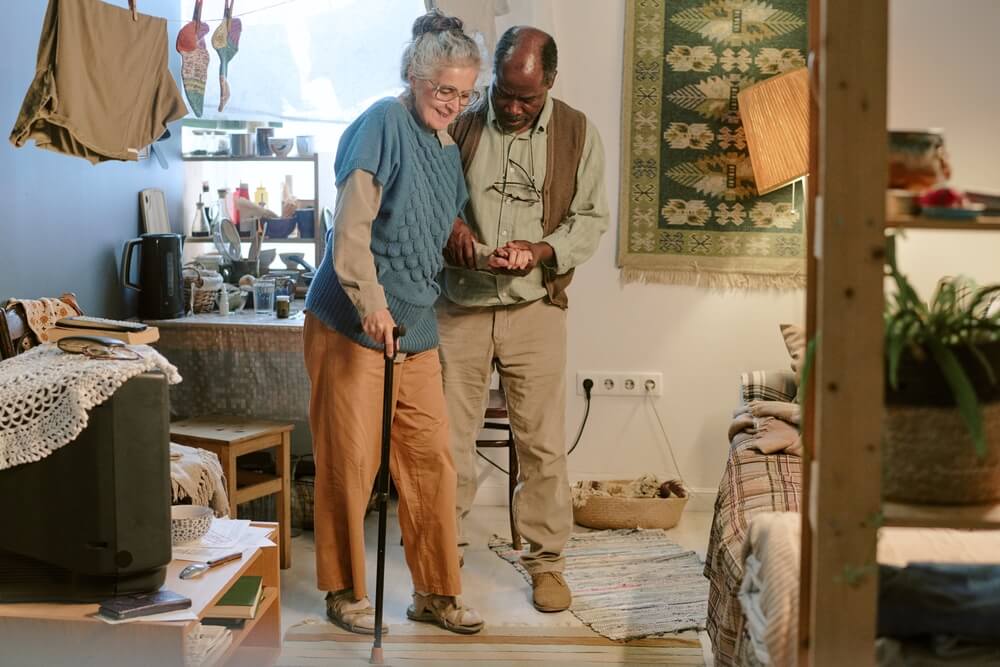
A caregiver who simply lifts a stroke survivor in and out of a chair robs them of the repetitive practice that builds strength and neural pathways. A caregiver who understands stroke recovery guides the movement, provides just enough assistance to keep it safe, and lets the person’s effort do the work. This is called facilitative care, and it requires training and intention.
Beyond rehabilitation support, home care during this period covers personal hygiene, meal preparation, transportation to therapy appointments, medication reminders, fall prevention, and perhaps most importantly — consistent companionship during a time when isolation and depression are significant risks.
The goal, through all of it, is to keep recovery moving forward on every front simultaneously, not just the physical one.
When Family Caregivers Need Support Too
Caring for someone in stroke recovery is physically demanding, emotionally draining, and logistically complex. The family member who takes it on — often a spouse or an adult child — rarely gets to choose whether they’re ready. They just become the caregiver, because someone has to.
Caregiver burnout in the post-stroke period is common and serious. It affects the quality of care the survivor receives, the health of the caregiver, and the long-term sustainability of keeping the person at home. Recognizing the signs early — persistent exhaustion, growing resentment, neglecting your own health — and responding to them is not selfish. It’s necessary.
Respite care, even a few hours a week, can make the difference between a family care arrangement that holds and one that collapses. Building it in from the beginning is easier than adding it after a crisis.
Frequently Asked Questions
How long does stroke recovery take at home? Recovery timelines vary widely depending on the severity of the stroke, the area of the brain affected, the speed of initial treatment, and the consistency of rehabilitation afterward. Most neurological recovery happens within the first six months, but improvements in function and quality of life can continue for years. The first 90 days at home are particularly important — the brain’s plasticity is highest during this window, and consistent rehabilitation effort produces the most significant gains.
What are the biggest challenges of caring for a stroke survivor at home? Families most commonly struggle with the cognitive and emotional changes that accompany stroke — fatigue, emotional lability, memory problems, and personality shifts that weren’t anticipated. Physical care demands are significant but learnable. The unpredictability of recovery, the coordination required to maintain therapy, and the emotional weight of sustained caregiving without clear milestones are what wear families down over time.
When should a stroke survivor start therapy after coming home? As soon as possible. Outpatient therapy should be scheduled before hospital or rehab discharge, not after. The first three to six months post-stroke represent the period of greatest neuroplasticity, and delays in therapy during this window can result in slower or less complete recovery. If scheduling barriers arise, home-based therapy is an option worth exploring immediately.
Does Medicare cover home care after a stroke? Medicare covers skilled home health services — nursing visits, physical therapy, occupational therapy, speech therapy — when the patient is homebound and the care is medically necessary, as certified by a physician. It does not cover non-medical home care, such as help with bathing, meals, or daily companionship. That type of support must be arranged separately, through private pay, long-term care insurance, or other programs.
How do you prevent a second stroke during recovery at home? Medication compliance is the most critical factor — particularly for blood pressure control and anticoagulation therapy as prescribed. Lifestyle factors including diet, physical activity within safe limits, and avoiding smoking also matter significantly. Regular follow-up appointments with the neurologist or primary care physician should not be deferred because the person “seems fine.” Many second strokes are preventable when risk factors are actively managed.
Moving Forward From Here
The first 90 days of stroke recovery at home are hard. They’re also the window where the most meaningful progress happens — where the brain is most receptive, where good habits are formed or lost, where the foundation for long-term function is either built or missed.
Families who navigate this period well aren’t necessarily the ones with the most resources. They’re the ones who understood early that they didn’t have to do it alone. If you’re in the middle of this right now and trying to figure out what level of support makes sense, a conversation with a home care professional is a useful next step.