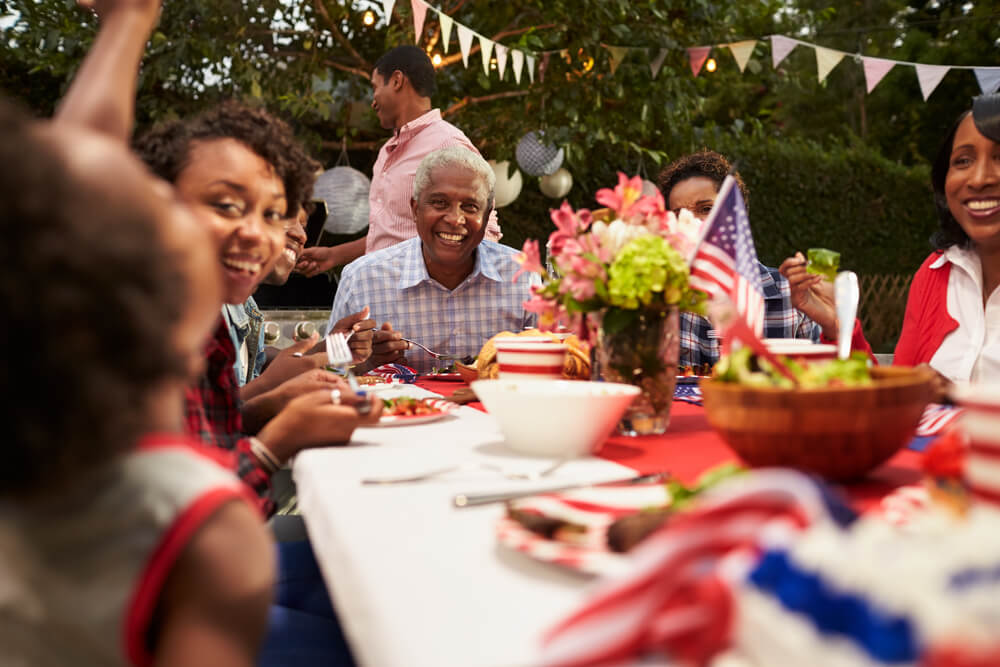
There’s something about the Fourth of July that brings people together in ways other holidays don’t quite manage. Neighborhoods come alive, families travel from across the country, and for one long weekend, the calendar clears in a way that makes real time together possible. For older adults, that kind of gathering can be genuinely restorative, a chance to be at the center of something, surrounded by the people they love.
It can also be exhausting, overstimulating, and hard on the body in July heat. Celebrating the Fourth of July with seniors well means holding both of those truths at once, and planning for a holiday that’s festive without being depleting.
Quick Answer: Fourth of July With Seniors
The best Fourth of July celebrations for seniors prioritize shade, hydration, manageable noise levels, and a pace that allows for rest. Morning or early evening gatherings work better than midday events in peak heat. Familiar routines, meaningful roles in the celebration, and a quiet space to step away from the crowd make the holiday genuinely enjoyable rather than something to survive.
Why This Holiday Deserves a Little Extra Thought
The Fourth of July sits squarely in the hottest part of summer, runs later into the evening than most holidays, and involves fireworks (which are loud, unpredictable, and startling even for people who enjoy them). For seniors, and particularly for those with hearing sensitivities, heart conditions, or cognitive changes, those elements add up.
This isn’t an argument for skipping the holiday. It’s an argument for planning it with the same care you’d give any meaningful event. A little forethought changes the experience from one that leaves a senior exhausted and overstimulated to one that becomes a genuine memory.
The families who do this best don’t build a separate, scaled-back version of the holiday for their older relatives. They make the celebration itself more thoughtful, which usually makes it better for everyone.
Setting Up the Day for Success
Where the celebration happens and how it’s structured matters more than most families anticipate.
If the gathering is outdoors, shade is non-negotiable. A canopy, a covered porch, or a spot under mature trees gives seniors (and honestly everyone) a place to enjoy the day without absorbing direct sun for hours. Positioning seating near the shade rather than in the thick of open activity means an older adult can be part of the gathering without needing to choose between sun exposure and missing everything.
Timing the most active parts of the celebration for the morning or early evening (before 11 a.m. or after 5 p.m.) makes the heat significantly more manageable. A backyard cookout that starts at 10 a.m. and winds down through the afternoon is a very different physical experience than one that peaks at 2 p.m.
Having a quiet indoor space available matters too. Not as a place to send the senior when they become inconvenient, but as a genuine option for anyone who needs a break from noise and heat. Making it known and easy to access, rather than a last resort, changes how it functions.
Activities That Include Rather Than Sideline
The best Fourth of July moments for seniors come from being included, not accommodated. There’s a meaningful difference between an older adult who is present at the celebration and one who is genuinely part of it.
Giving seniors a role is one of the most effective ways to make that happen. Asking a grandmother to oversee the potato salad, putting a grandfather in charge of the music playlist, inviting an older relative to share a memory of past Fourth of July celebrations with the kids (these aren’t token gestures) are acknowledgments that the person brings something to the gathering that no one else does.
Quieter activities that work well alongside the main celebration include card games, lawn games adapted for seating, watching a classic film about American history, or simply sitting together and talking while other activity happens nearby. The goal is presence and engagement, not a separate program.
For seniors with dementia or significant cognitive changes, large gatherings can be disorienting. A smaller, earlier celebration with immediate family (before the noise and crowd of the evening) often works better than full participation in a large event. Familiar faces, a predictable setting, and a shorter duration tend to produce a genuinely good experience rather than an overwhelming one.
Food, Drinks, and Staying Comfortable
Holiday food is one of the genuine pleasures of the Fourth, and there’s no reason seniors can’t participate fully. A few practical considerations make it safer and more enjoyable.
Hydration needs to be intentional, not incidental. In July heat, adults of all ages underestimate how much fluid they’re losing. For seniors, whose thirst signal is less reliable, having water available and visible (not tucked away in a cooler) matters. A glass of water before the first plate of food, and regularly throughout the day, builds a baseline that protects against afternoon fatigue and confusion.
Heavy, rich foods in significant quantities in hot weather can contribute to the sluggishness that makes the second half of a summer day harder. Lighter options alongside the traditional fare (fruit, cold salads, chilled proteins) give everyone, including seniors, choices that don’t weigh them down.
Alcohol in summer heat deserves a word. It accelerates dehydration and can interact with many common medications. This isn’t about removing it from the celebration. It’s about making sure a senior who wants a cold beer has also had water, and that the people around them are paying gentle attention.
Fireworks: Enjoyment Without the Strain
Fireworks are the emotional peak of the holiday for many people, and there’s no reason seniors should miss them entirely. But the logistics of a public fireworks show (late evening, crowds, limited seating, loud sustained noise) can be genuinely taxing.
Watching from a distance has real advantages. A blanket in the backyard, a second-floor window, or a parking spot at a slight remove from the main crowd offers the visual experience of fireworks with significantly less noise and crowd stress. For seniors with hearing aids, the sustained loud noise of fireworks at close range can be painful, so turning down or removing the devices before the show is worth knowing about in advance.
For seniors with dementia, fireworks can be frightening rather than festive. The loud unpredictable sounds, the darkness interrupted by bright flashes, and the general disruption of routine can cause real distress. A calm indoor environment with familiar sounds (music, a familiar television program) is often genuinely better than participation in the fireworks portion of the evening.
Frequently Asked Questions
How do you celebrate the Fourth of July with a senior who has dementia?
Smaller, earlier gatherings with familiar people work better than large evening events. Keep the environment predictable, avoid the loud and unpredictable elements of fireworks if they cause distress, and focus on activities that connect to long-term memory (music from their era, looking at old photographs, or familiar foods). The goal is a calm, connected experience rather than full participation in a holiday that can be overstimulating.
What are safe outdoor activities for seniors on the Fourth of July?
Morning lawn games, shaded porch gatherings, backyard cookouts timed for morning or early evening, and watching fireworks from a distance or from home are all good options. The priorities are shade, hydration, seating, and a pace that allows for rest. Activities with a social component (games that involve multiple generations, shared meals, storytelling) tend to be the most meaningful.
How do you keep seniors hydrated at a summer holiday celebration?
Make water visible and accessible rather than tucked away. Offer a glass of water before meals and throughout the day without waiting for someone to ask. Water-rich foods (watermelon, cucumbers, cold fruit) supplement fluid intake. Watch for signs of dehydration: unusual fatigue, confusion, dry mouth, or darker urine. In seniors, these symptoms can appear before thirst does.
What should family caregivers watch for at Fourth of July gatherings?
Heat exhaustion is the primary concern. Watch for heavy sweating, weakness, pale skin, and nausea, and respond immediately with rest, hydration, and cooling. Also watch for overstimulation in seniors with cognitive changes, medication timing disruptions caused by the irregular schedule of a holiday, and fatigue that builds gradually over the course of a long day. Having a plan for an early exit if needed (without making it feel like a failure) takes pressure off everyone.
The Holiday That’s Worth Getting Right
The Fourth of July is one of the few occasions when multiple generations genuinely want to be in the same place at the same time. For older adults, that kind of belonging (being sought out, included, celebrated alongside) matters in ways that go well beyond one afternoon.
The small adjustments that make the holiday work better for a senior in the family tend to make it work better for everyone. More shade. Better timing. A slower pace. More conversation, less noise. If you’re thinking through how to support an older loved one through the summer (whether for a holiday gathering or on an ongoing basis) we’re happy to talk through what that support could look like.