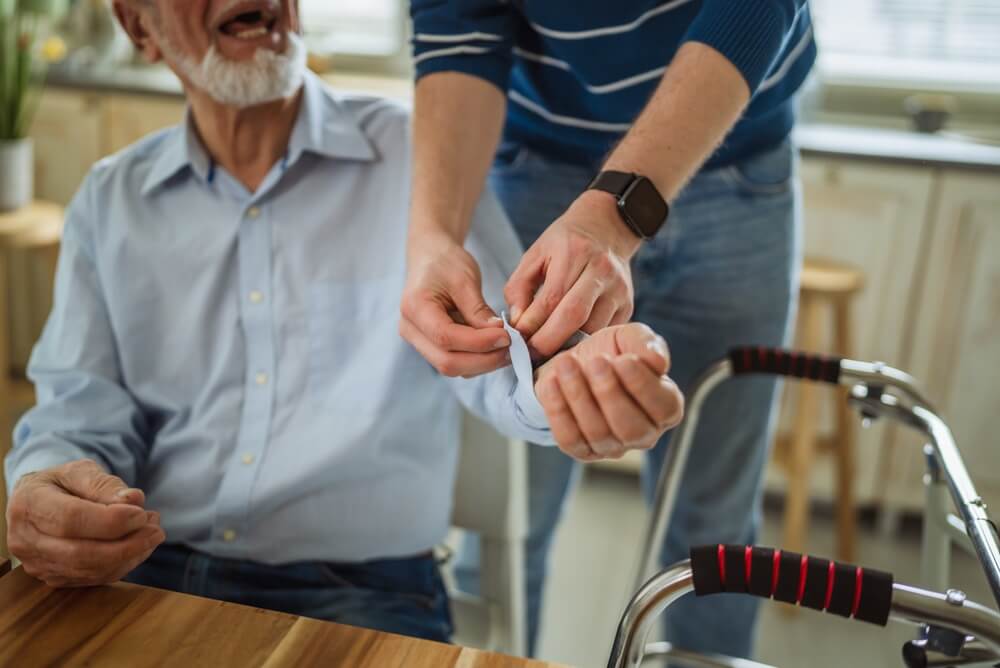
The tremor was the first thing they noticed. Then the shuffle in the hallway. Then the morning routine that used to take twenty minutes started taking an hour — and the frustration on both sides was getting harder to hide. A Parkinson’s diagnosis doesn’t announce a single moment of crisis. It announces a slow shift in what home looks like, and most families aren’t sure when to adjust or how.
Home care for Parkinson’s disease is one of the most practical tools available to families navigating that shift. But knowing what it actually involves — and when it becomes necessary — takes more than a general understanding of the disease.
Quick Answer: Home Care for Parkinson’s Disease
Home care for Parkinson’s disease provides hands-on support with mobility, medication management, daily hygiene, and fall prevention — all areas that become progressively harder to manage alone. Professional caregivers trained in Parkinson’s care help your loved one stay safely at home longer while reducing physical and emotional strain on family members.
What Parkinson’s Actually Does to Daily Life
Most people associate Parkinson’s with tremors. That’s accurate, but incomplete. The disease affects the entire nervous system in ways that ripple through every corner of daily life — and the challenges that create the most difficulty at home are often not the ones families expect.
Motor symptoms are the most visible. Slowed movement, muscle rigidity, and a shuffling gait change how long it takes to get dressed, prepare a meal, or rise from a chair. Fine motor control — buttoning a shirt, holding a fork steadily, writing legibly — becomes unreliable in ways that compound frustration and erode independence.
Less discussed but equally significant are the non-motor symptoms. Cognitive changes, including difficulty with memory and executive function, can appear even in early and mid-stage Parkinson’s. Sleep disruption is nearly universal, which means fatigue amplifies every other symptom. Depression and anxiety affect roughly half of all people with Parkinson’s, often before the physical symptoms become severe. Swallowing difficulties emerge over time and create real safety concerns around eating and medication.
For families managing care at home, this combination — a moving target of physical, cognitive, and emotional change — is what makes Parkinson’s uniquely demanding compared to conditions that progress more predictably.
The Fall Risk Families Most Often Underestimate
Falls are the single greatest safety risk for people with Parkinson’s disease, and they happen for reasons that go beyond simple unsteadiness. Postural instability — the loss of automatic balance adjustments — means a person with Parkinson’s can tip and fall faster than they can react. Freezing episodes, where movement suddenly stops mid-stride, are common and dangerous, particularly in doorways, on uneven surfaces, and when turning.
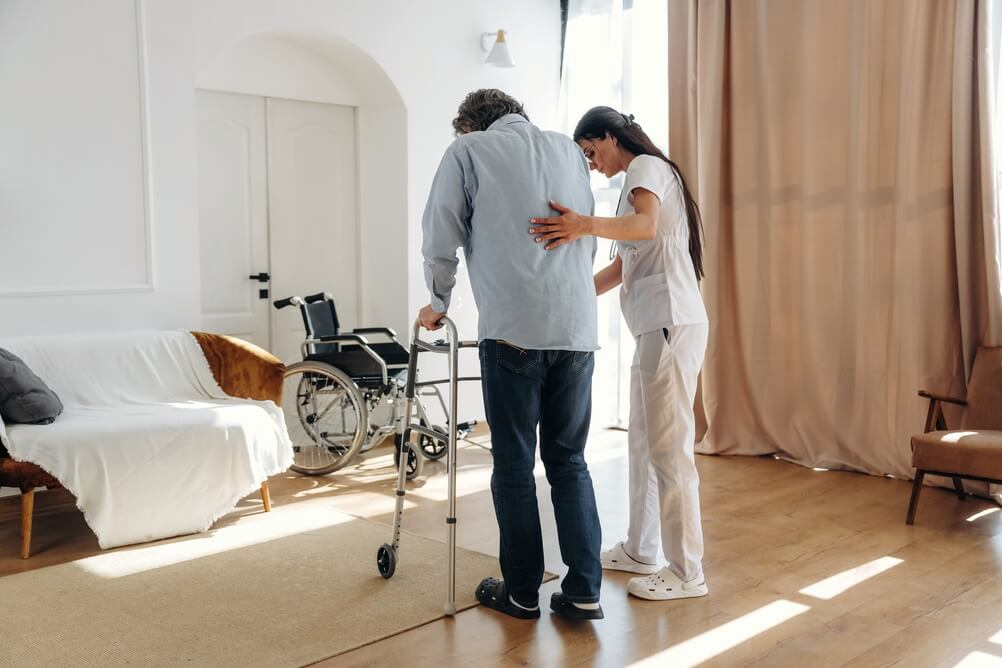
The home itself often needs to change before the person’s condition does. Loose rugs, furniture arranged for aesthetics rather than navigation, bathrooms without grab bars, and beds too low to rise from easily become hazards long before a family recognizes them as such.
A professional caregiver experienced with Parkinson’s brings a specific kind of vigilance to this. They know to cue movement verbally when freezing begins. They know how to assist with transfers without pulling in ways that increase fall risk. They understand that rushing someone with Parkinson’s — something well-meaning family members do without realizing it — makes every physical task more dangerous.
Medication Management Is More Complicated Than It Looks
Parkinson’s medications, particularly levodopa-based therapies, work on a precise schedule. Taking them late by even thirty minutes can mean the difference between a person moving relatively freely and being significantly more impaired for hours. “Off” periods — windows when medication effectiveness drops before the next dose — are real and sometimes debilitating.
Managing this at home requires more than setting a phone alarm. It requires recognizing which symptoms signal an approaching off period, knowing what to do when a dose is missed, identifying when new symptoms might indicate a medication adjustment is needed, and communicating clearly with the neurologist overseeing care.
Family caregivers can become skilled at this over time. But the learning curve is steep, and the consequences of medication errors with Parkinson’s drugs are serious enough that professional support — whether a home care aide working alongside family or a skilled nursing professional — often makes a measurable difference in quality of life.
When Professional Home Care for Parkinson’s Disease Becomes Necessary
There’s no universal threshold, but there are consistent patterns that signal the need for more structured support.
When the morning routine consistently ends in exhaustion for both the person with Parkinson’s and whoever is helping, that matters. When falls have occurred — or near-falls are happening regularly — that matters. When the family caregiver is losing sleep, skipping their own medical appointments, or feeling resentment build, that matters. When the person with Parkinson’s resists care from family because the dynamic has become tense, a professional can restore dignity to the process in ways a loving family member sometimes cannot.
A spouse in their mid-seventies caring for a partner with mid-stage Parkinson’s — managing medications, nighttime disturbances, and the emotional weight of watching someone they love change — is doing everything right and still running on empty. Adding a professional caregiver for even a few hours a day doesn’t replace the spouse. It stands alongside them, which changes the equation significantly.
Home care in this context isn’t an admission that family has failed. It’s a recognition that the needs have grown beyond what one or two people can safely carry alone.
What Parkinson’s-Specific Home Care Actually Involves
Not all home care is equally suited to Parkinson’s. Families should look for caregivers with specific training or experience in a few key areas.
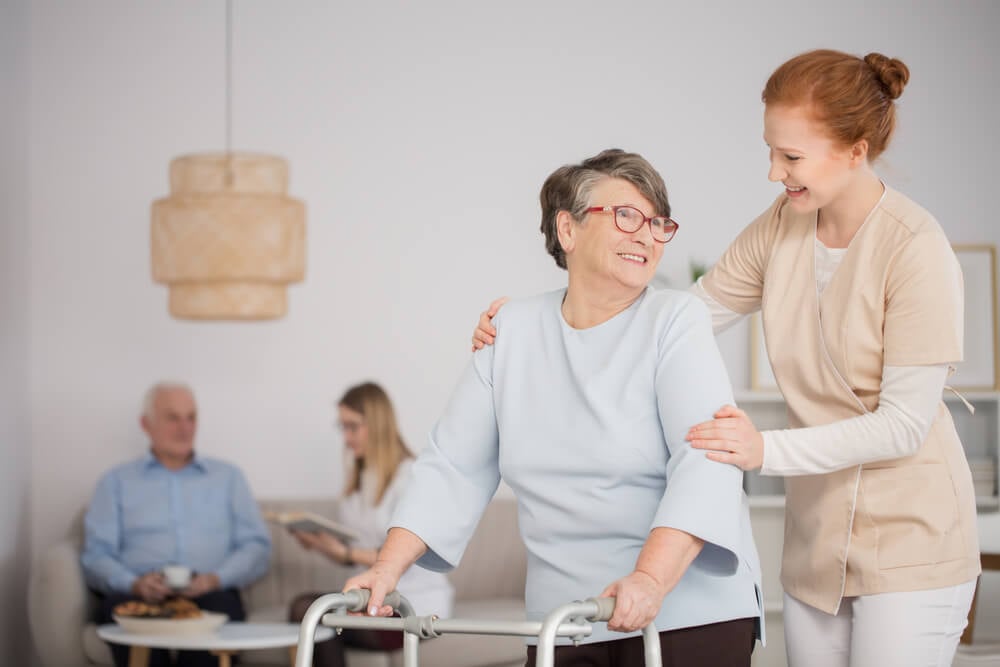
Mobility assistance and safe transfer techniques are foundational. This includes helping someone move from bed to chair, supporting them during walking, and knowing when and how to use gait belts and assistive devices correctly.
Cueing strategies matter more than most families realize. Visual cues — a line of tape on the floor, a target to step toward — can break a freezing episode when verbal encouragement alone won’t. Experienced Parkinson’s caregivers carry this toolkit as second nature.
Nutritional support becomes important as swallowing difficulties progress. Meal preparation, texture modification, and ensuring adequate hydration require patience and attention that goes beyond simply putting food on the table.
Communication support is increasingly relevant in later stages, when speech becomes quieter or harder to understand. A skilled caregiver learns to listen differently and never finishes a sentence on someone else’s behalf.
Cognitive engagement — activities that maintain stimulation, social connection, and a sense of purpose — is part of quality Parkinson’s care, not an add-on.
Having the Conversation With Your Loved One
People with Parkinson’s often retain significant insight into their own condition, particularly in earlier stages. Resistance to help is rarely denial. More often it reflects a genuine fear that accepting care means surrendering independence — and independence has real meaning to people who have spent a lifetime building it.
The most effective conversations about home care don’t start with a list of concerns. They start with what the person with Parkinson’s values most: staying in their home, keeping their routines, maintaining dignity in personal care. Framing professional support as the thing that makes those values possible — rather than the thing that signals decline — changes the conversation entirely.
Introducing care gradually also helps. A few hours a week focused on specific tasks is less threatening than a full care plan. Trust builds over time, and so does acceptance.
Frequently Asked Questions
When does someone with Parkinson’s disease need a caregiver? Most families benefit from professional support when daily routines consistently require more than one person to manage safely, when fall risk is increasing, or when the primary family caregiver is showing signs of burnout. There’s no single stage that triggers the need — it depends on the specific symptoms, living situation, and how much support is already in place. Earlier is almost always better than waiting for a crisis.
What kind of care do Parkinson’s patients need at home? Home care for Parkinson’s typically includes mobility and transfer assistance, medication reminders, help with personal hygiene, meal preparation, and fall prevention. As the disease progresses, needs expand to include communication support, cognitive engagement, and more intensive physical assistance. Caregivers with specific Parkinson’s training are better equipped to handle the nuances — including freezing episodes, off periods, and the emotional dimensions of the disease.
How do you care for a parent with Parkinson’s at home? Start with safety — assess and modify the home environment to reduce fall risk. Establish a consistent daily routine, since predictability helps manage symptoms. Learn the medication schedule and what off periods look like. Build a care team early, including a movement disorder specialist, and don’t wait until you’re overwhelmed to bring in professional support. Caregiver fatigue is one of the most common reasons care breaks down.
What stage of Parkinson’s requires full-time care? Full-time care is typically needed in the later stages — stages 4 and 5 on the Hoehn and Yahr scale — when mobility is severely limited and independent living is no longer safe. Many families begin incorporating part-time professional home care in stage 2 or 3, when symptoms are affecting daily function but the person is still largely mobile. Starting care earlier makes the transition smoother and safer.
Can someone with Parkinson’s live alone? In early stages, many people with Parkinson’s live independently with minimal support. As the disease progresses, living alone carries increasing risk — particularly due to falls, medication complexity, and cognitive changes. Medical alert devices, regular check-ins, and eventually professional home care can extend safe independent living significantly. The goal is staying ahead of the risk, not responding after something goes wrong.
Taking the Next Step
A Parkinson’s diagnosis changes the timeline, but it doesn’t change what your family wants — for your loved one to be safe, comfortable, and supported in the place they call home. The question isn’t whether help will eventually be needed. It’s whether you build that support system before a crisis forces the decision, or while there’s still time to do it thoughtfully.
Start with a conversation — with your loved one, with their neurologist, and with a home care professional who understands what Parkinson’s looks like day to day. If you’re not sure what that support could look like for your family, we’re glad to help you think it through.